


🇫🇮♻️🖥️ Microsoft is building a data center area in the capital region in Finland, whose waste heat will be recovered by Fortum and recycled into district heating. It is the world’s largest data center waste heat recycling project.
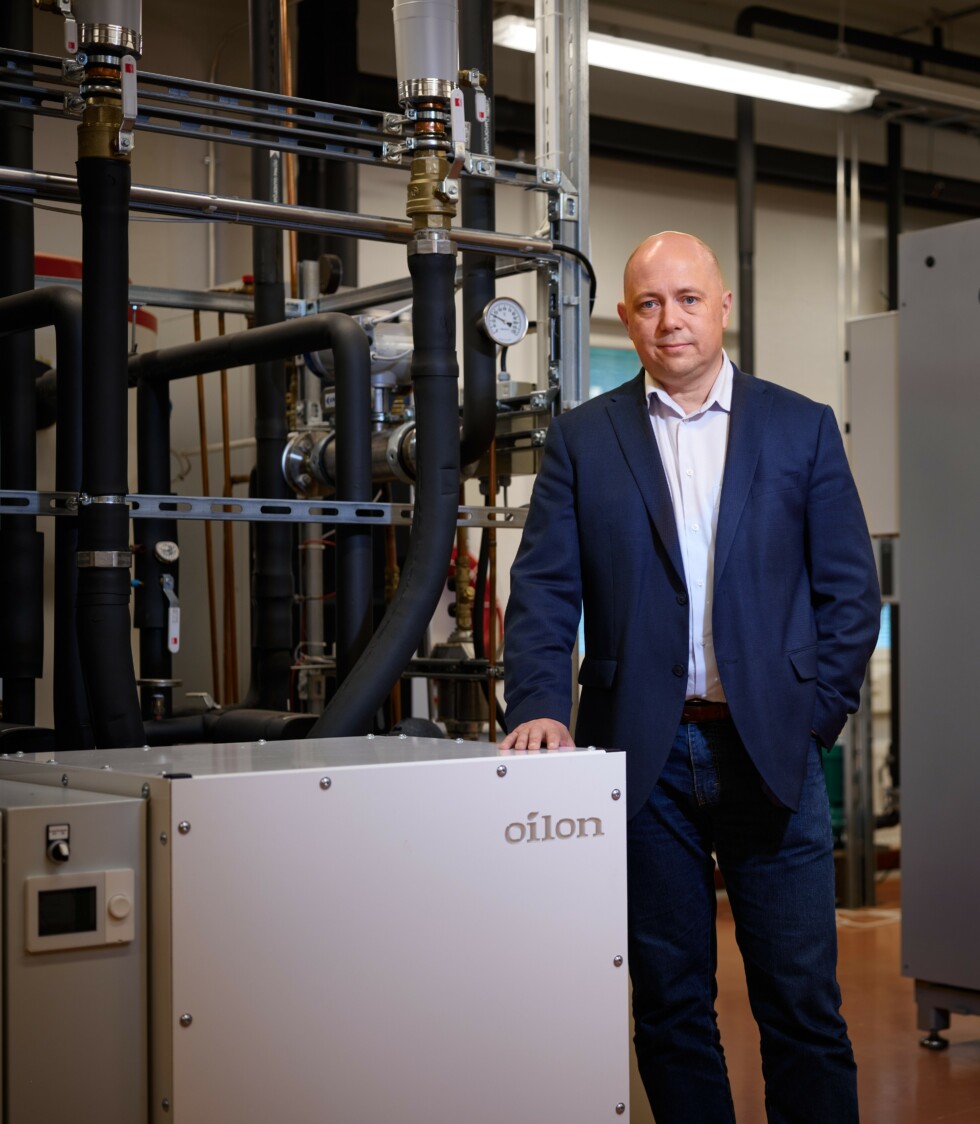
Oilon supplies Fortum with industrial heat pumps for both heat pump plants. For Oilon, the delivery is the largest in the company’s history.
“The value of the delivery is approximately 15 million euros. This project is a great demonstration of our ability to deliver solutions on a large scale and support our customers in the green transition”, says Oilon CEO Tero Tulokas .
Fortum is a pioneer in reducing carbon dioxide emissions in energy production and aims to be carbon neutral in 2030. Fortum is constantly implementing the best and most cost-effective ways to break away from fossil thermal energy production. Here, heat pumps play a very important role.
“In the future, the district heating network will function more and more as an energy recycling platform, where different heat sources and energy flows can be utilized. Beneficial use is possible with the help of heat pumps. For example, in this case, waste heat from cooling the data center would be generated anyway, and with the help of this technology, it can be recycled”, says Fortum’s director responsible for new energy solutions, Thomas Ekholm .
With energy recycling for top efficiency ratios
Fortum’s heat pump plants are being built with so-called CHC solution, i.e. combined heating and cooling (Combined Heat and Cooling). Heat pumps can be used to cool data centers and recover the waste heat generated from them, which is further directed to the district heating network, i.e. heat and cold are produced at the same time.
“When the energy flows are efficiently recycled, excellent efficiencies are achieved: The total COP of the system is 6.6, meaning that one unit of electricity used by the heat pump produces 6.6 times the amount of energy for cooling and heating,” says Jussi Alpua, Oilon’s sales manager responsible for industrial heat pumps .
The delivery includes several Oilon S-series heat pumps for each heat pump plant, each weighing about 15,000 kilograms, or about 10 passenger cars. They produce district heating with a total power of almost 40 megawatts at a temperature of 85 degrees in both locations.
The construction work of the heat pump plant has started first in Kirkkonummi, where the first heat pumps will be delivered at the beginning of 2025. The Espoo project will follow about half a year later.
When waste heat recovery is fully operational, the heat pump plants produce emission-free district heat equal to the heat needs of about 100,000 district heating customers, which is about 40 percent of the heat needs of about 250,000 district heat users in Espoo, Kauniainen and Kirkkonummi. The recycling of waste heat from data centers then enables a permanent reduction of up to 400,000 tons of annual carbon dioxide emissions. The projects correspond to more than 1% of the emission reduction needs in accordance with Finland’s carbon neutrality goal .

An internationally significant project
Finland is at the forefront of the EU’s carbon neutrality goals, and in this project, Fortum, as a leading energy company, offers a convincing practical example of how these goals can be reached with the help of Oilon’s technology.
Heat pumps have traditionally been seen more as projects that improve energy efficiency as part of heat production in industry and energy production, but now heat pumps are increasingly used as a primary form of energy production on a large industrial scale.
“Technologically speaking, the steak is in the fact that an efficient overall solution has been created by utilizing several heat pumps. Thanks to the wide power control range of the system, the demands of the process, i.e. the changing need for cooling and heating, can be met flexibly and precisely. The series connections, i.e. the stepped production of heat and cooling, have achieved excellent efficiency in the entire power control range”, says Martti Kukkola, Oilon’s business manager for industrial heat pumps .
According to Kukkola, the project combines two strong trends in a great way, the electrification of energy production and on the other hand the utilization of waste heat, i.e. energy recycling. The project is also very interesting at the international level.
“Large global companies are following very closely what is being done in Pohjola to achieve carbon-neutral energy production. This reference will open doors for Oilon to even bigger projects in the international market. Like the rest of the world, heat pumps will play an even bigger role at Oilon in the future,” he says.