


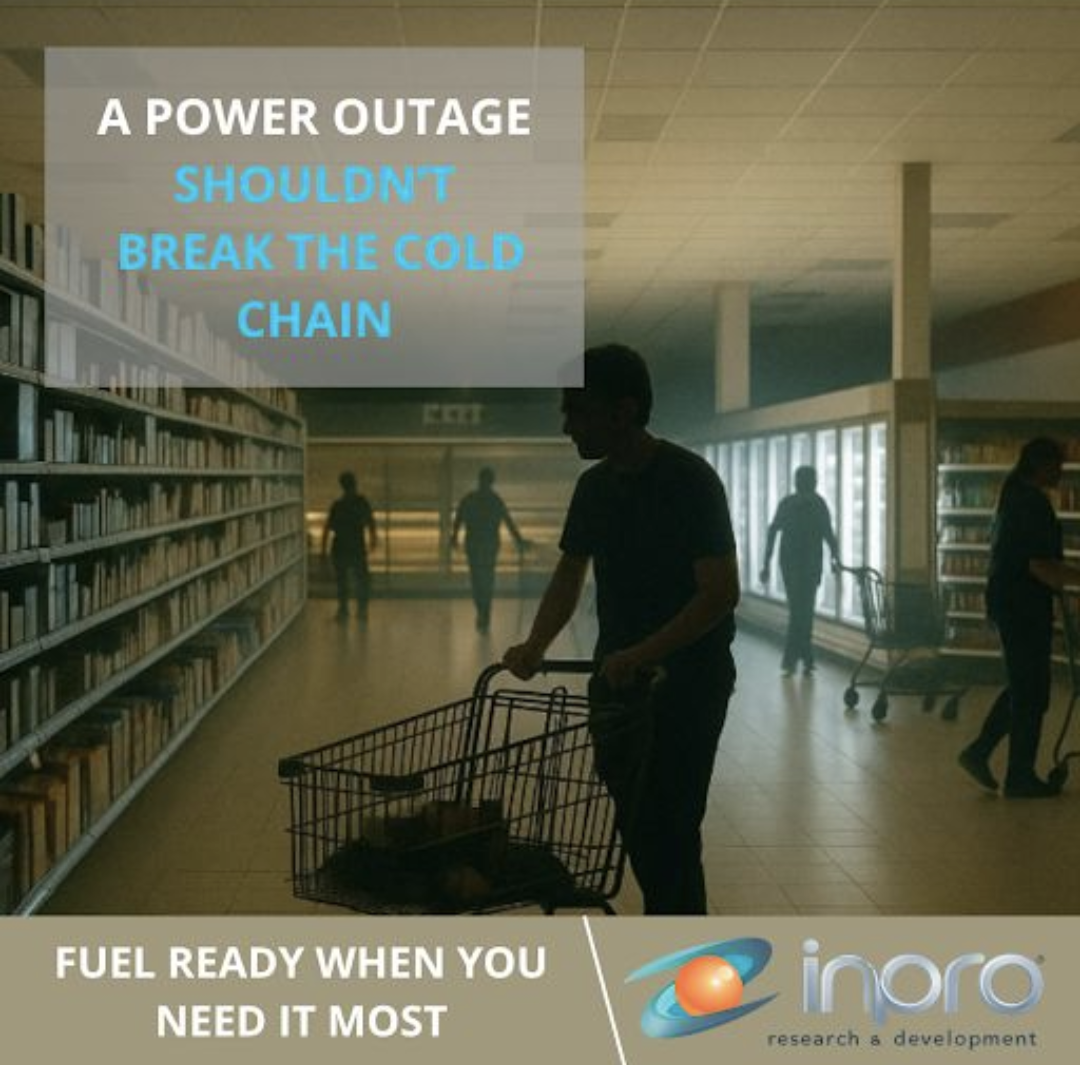
This week around 700 French supermarkets were hit by a cyberattack on their refrigeration systems. According to French TV, the attackers forced display cases into continuous defrost and set temperatures as high as 50 °C. Stores had to throw out food, and France’s finance minister said the attack “touches the heart of our food security”.
It is not the first time the cold chain has proved vulnerable. During the blackout on the Iberian Peninsula in April 2025, Spanish supermarkets lost at least €53 million according to the trade association Asedas, because fresh, chilled and frozen products had to be discarded.
Two different threats, one consequence
A cyberattack and a power cut are two different things. A generator does not help if someone has taken over the refrigeration controls – that takes updated software and a proper firewall.
But the consequence is the same: when refrigeration fails, the stock is lost. And power cuts remain the most common threat to the cold chain. That is where backup power decides whether the store stays open.
Spain showed the difference clearly. Large chains with emergency generators stayed open. Others had to close fully or partly, and smaller shops without backup had to shut down.
The generator is not enough – the diesel has to be right too
It is easy to think the job is done once the generator is installed. But an emergency generator may only run at its annual test, and the diesel can sit in the tank for years. In that time, things happen:
- Water collects in the tank from condensation, especially in unheated rooms and outdoor tanks.
- Diesel ages and forms sediment and sludge.
- Microbial growth can develop at the water–diesel interface and block filters and nozzles.
The result is a generator that starts fine for the test but stalls after an hour of real operation because the filters clog – exactly when the refrigeration needs it most.
Preventive fuel polishing
Spanish manufacturer Inpro specialises in exactly this. Alongside transfer units for day tanks, Inpro makes preventive fuel polishing systems that regularly circulate the diesel in the tank through filters and water separators, keeping it clean and ready even if the generator rarely runs.
According to the manufacturer, Inpro equipment is installed in more than 2,000 critical facilities such as hospitals, data centres, public buildings and water plants. Supermarkets are a natural next step when the cold chain must be protected.
Who should think about this?
- Supermarkets and grocery chains with backup power for chilled and frozen goods.
- Cold stores and food warehouses, where a long outage quickly becomes expensive.
- Food producers such as abattoirs and dairies, where production cannot tolerate interruptions.
The first question is simple: when was the diesel in your backup tank last checked for water and sediment?
Inpro at Arne Nielsen A/S
Arne Nielsen A/S supplies Inpro equipment for the safe handling of oil and diesel, including transfer, level control, leak monitoring and fuel polishing. If you have a backup generator with a tank that needs reviewing, we are happy to help find the right solution.
Write to us at info@arnenielsen.dk.
Sources
- AP via TechXplore: Cyberattacks hit European supermarket chains and disrupt refrigeration systems, 14 October 2026
- Inpro: Supermarkets after the electricity blackout