


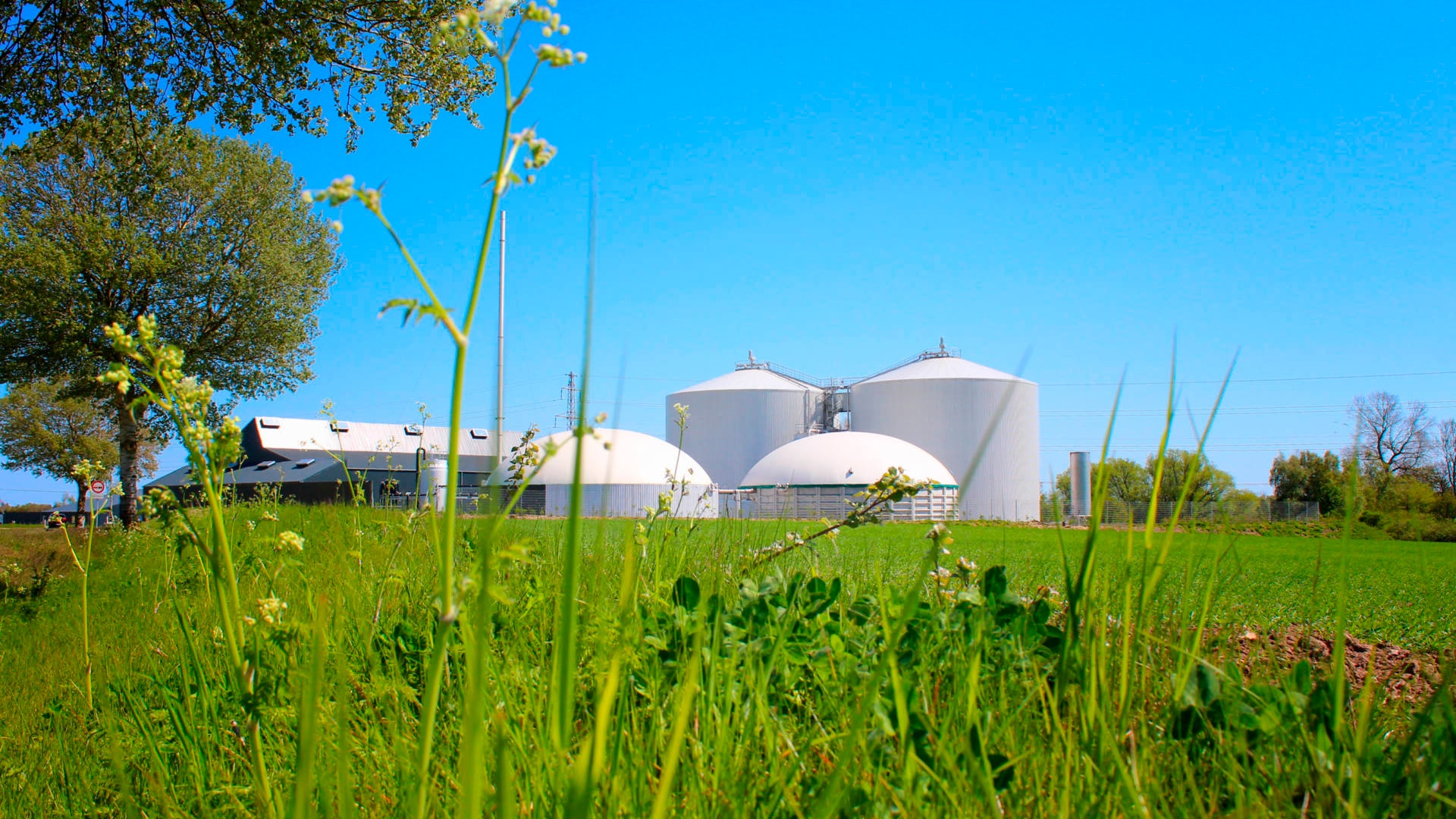
“We make enough green biogas for our gas boilers. So why do we have to get rid of them?” A homeowner from Kastrup near Copenhagen put that question to the Danish broadcaster TV 2 Kosmopol. It is a good question, and the answer is more nuanced than you might think.
The biogas is already in the pipes
According to Hans Henrik Lindboe, partner at the consultancy EA Energianalyse, Danish homeowners have received biogas through the gas grid for around 20 years. The gas in the boiler today is a mix of biomethane and natural gas. Production is now large enough to match the gas consumption of all private households, and according to Lindboe, Denmark could produce biogas equal to the country’s entire gas consumption in about 10 years.
Even so, a broad majority in the Danish parliament decided in 2022 that the roughly quarter of a million gas boilers must be replaced by heat pumps, district heating or other green solutions by 2035.
The expert’s answer: use the gas where it cannot be replaced
Lindboe’s arguments in brief:
- Industry needs the gas. Producers of bricks, cement and chemicals need temperatures of 200 degrees or more. Heat pumps and district heating cannot do that job, and industry uses as much gas as households.
- Biogas is expensive. It needs state subsidies to produce.
- Heat pumps and district heating are cheaper and more efficient for heating a home.
In short: gas is a scarce resource, and it should be used where there is no alternative.
The homeowner’s objection: spread the risk
The homeowner accepts the security-of-supply argument, but does not think everyone should bet on a single solution. As she told TV 2 Kosmopol: if everyone switches to heat pumps or solar, we are vulnerable too.
It is a point we recognise from our own day-to-day work. The heat pump is the most efficient way to heat a home for most of the year. But on the coldest days, when electricity prices are high, or when the heat pump needs servicing, it is good to have a plan B.
Hybrid: the heat pump does most of the work, the boiler covers the peaks
A hybrid solution brings the two views together. The heat pump covers the base load and supplies most of the energy. The gas boiler becomes the backup and uses only a little gas, on the days when the heat pump has the hardest time.
The home then uses far less gas than today, and the gas it does use can be biogas from the grid. Industry gets more of the gas, and the homeowner still has two legs to stand on.
For that solution we offer, among others, the Intercal ecoWP 2Xm, a compact R290 heat pump designed to run as a hybrid with an existing oil or gas boiler. We wrote about it on European Heat Pump Day. If you want to leave gas behind completely, the Zealux Inverboost Pad is an obvious choice.
What should you do with your gas boiler?
- Is the boiler old and worn? Then switching to a heat pump or district heating, if it reaches your area, is the obvious choice.
- Is the boiler in good condition? Then a hybrid solution, with the boiler as backup, can be a gentle first step in the green transition.
- Do you live outside the district heating network? Then the heat pump is the direct route away from gas.
Write to us at info@arnenielsen.com with the size of the home and the age of your gas boiler, and we will help you find the right solution.
Source: TV 2 Kosmopol (in Danish): Vi laver grøn biogas nok til vores gasfyr. Hvorfor skal vi så af med dem? (21 October 2026)
Photo: Solrød Biogas.